In the modern hiring landscape, recruiting teams face a major challenge: applicant volume has surged to record highs while recruiting capacity has shrunk. The widespread availability of one-click job applications and generative AI CV-building tools means that when organisations set out to hire staff, they are instantly flooded with inbound applications. Surveys from LinkedIn, Greenhouse, and Pew reveal a massive increase in applications between 2021 and 2025 for white-collar roles.
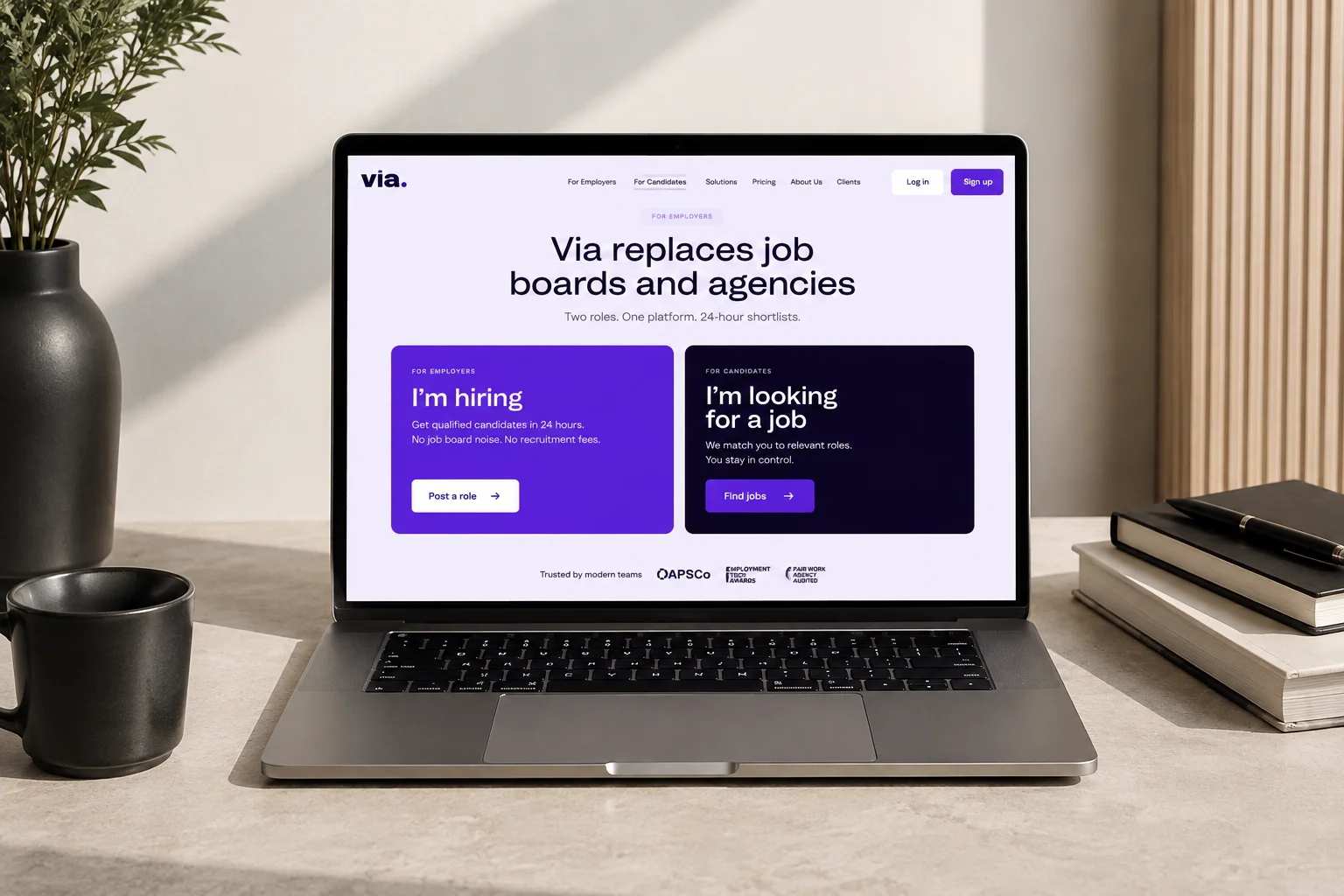
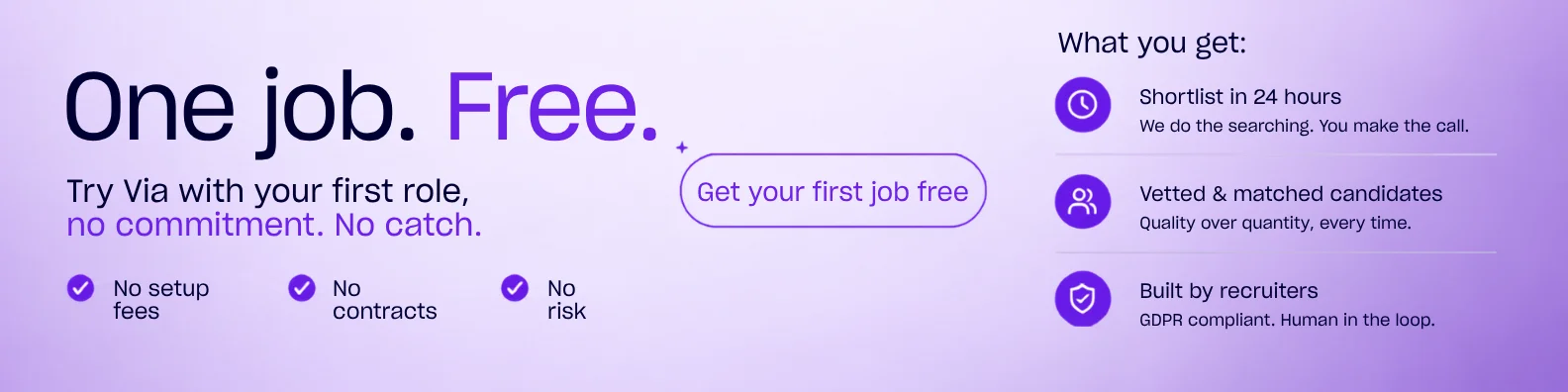
Building a system that accurately evaluates and matches high volumes of applicants at speed is remarkably hard to get right, which is why so few platforms have solved it effectively – and legally. However, at Via we’ve built the technology solve this problem: assessing hundreds of applicants fairly to deliver a vetted, interview-ready shortlist of top-level candidates in 24 hours.
The Inbound Application Crisis of 2026
Reviewing initial job applications has become an overwhelming challenge for hiring teams. According to InterviewFlowAI Benchmarks, average applications per job rose 239% from 28 to 95+ on average, with popular corporate roles easily exceeding 500 applications.
This influx has severely strained human capacity. Data from Pin's 2026 TA Report reveals the average time-to-fill now sits at 44 days (a 33% increase from 2021). Meanwhile, recruiters are spending between 12 to 23 hours per requisition solely opening, scanning, and logging inbound CVs, according to studies cited by Rhinoagents and NextMantra.
When faced with over 500 CVs, recruiters spend an average of just 6 to 8 seconds glancing at each one. This rushed review leads to snap judgments, favouring familiar company names, rejecting great candidates with non-traditional backgrounds, and letting buzzword-stuffed CVs slip through.
What is Autonomous Job Matching?
Autonomous job matching uses AI to assess candidate CVs against what a role actually requires, moving beyond basic keyword filters. Instead of just searching for specific words, the system understands real-world experience, skills, and career progression to automatically deliver an interview-ready shortlist.
Why Most Automated Screening Fails (and the Risks of Doing It Wrong)
Automating CV screening at scale is not just about speed, it is an intricate technical and regulatory challenge. Most attempts by legacy ATS providers and ad-hoc AI tools fall short or expose organisations to serious risks:
- Regulatory and Consent Risks (The AI Act): Under regulations such as the EU AI Act, AI systems used in recruitment are classified as high-risk. Deploying unvetted AI tools without candidate consent, clear disclosures, and strict data compliance can quickly become unlawful.
- Inconsistent, Non-Deterministic Outputs: Off-the-shelf AI models often suffer from inconsistency. Feeding the exact same CV into a generic model multiple times can produce wildly different scores and assessments each time it is run.
- Flawed Keyword Matching: Traditional ATS software still relies on rigid keyword searches, filtering out capable candidates who use different phrasing while rewarding applicants who game the system with keyword-stuffed CVs.
1. True Context Instead of Flawed Keyword Scoring
Generic AI tools struggle to understand the nuances of a career, often relying on basic keyword matching or assigning arbitrary percentage scores. Purpose-built technology evaluates real-world context, verifying mandatory qualifications, assessing recent hands-on experience, and recognising career growth without being tricked by buzzwords.
2. Respecting Candidates with Instant Match Notifications
One of the biggest complaints from jobseekers is waiting weeks in total silence or being forced through repetitive automated assessments. Purpose-built matching respects candidate time by notifying applicants the moment they match an open role, keeping top talent warm and responsive for hiring managers.
3. Curated Shortlists, Not Flooded Inboxes
Off-the-shelf tools simply dump dubiously ranked lists of candidates back on recruiters, leaving them with hours of manual work. At Via, our technology filters through tens of thousands of active registered jobseekers to deliver a curated shortlist of the top five interview-ready candidates in 24 hours, complete with verified skills, salary expectations, and availability.
4. Strict Compliance and Anti-Bias Guardrails
Using generalist AI tools creates serious legal liabilities under the EU AI Act. Purpose-built hiring technology is designed for compliance from the ground up, automatically redacting personal details to eliminate unconscious bias and providing clear, auditable rationale for why each candidate was matched.
Redefining the Hiring Funnel with Via
When organisations need to hire staff efficiently, traditional sourcing models and job boards often create more friction than value. Rather than paying for job board listings that flood inboxes with hundreds of unvetted CVs, modern organisations are turning to specialised platforms like Via (viamatch.ai).
Via (Via Match Limited) simplifies hiring by eliminating messy job boards entirely. Acting as an intelligent matching engine, Via evaluates registered candidate skills against role requirements and delivers a vetted shortlist of top interview-ready candidates (often the top five) in 24 hours. By focusing specifically on corporate and business-support roles, Via ensures hiring managers only spend time interviewing people who are genuinely qualified and a great fit.
Conclusion
Applicant volume has climbed over 200% in recent years, turning recruiting from a sourcing challenge into a severe triage bottleneck. Manual CV screening is no longer mathematically viable for corporate roles receiving hundreds of applications per role. By moving away from rudimentary keyword parsing and deploying an AI recruiter equipped with contextual job matching, talent acquisition teams can reduce their time-to-shortlist from weeks to just 24 hours. Ultimately, automating the top of the funnel allows human recruiters to spend less time reading PDFs and more time doing what they do best: building relationships and closing top talent.