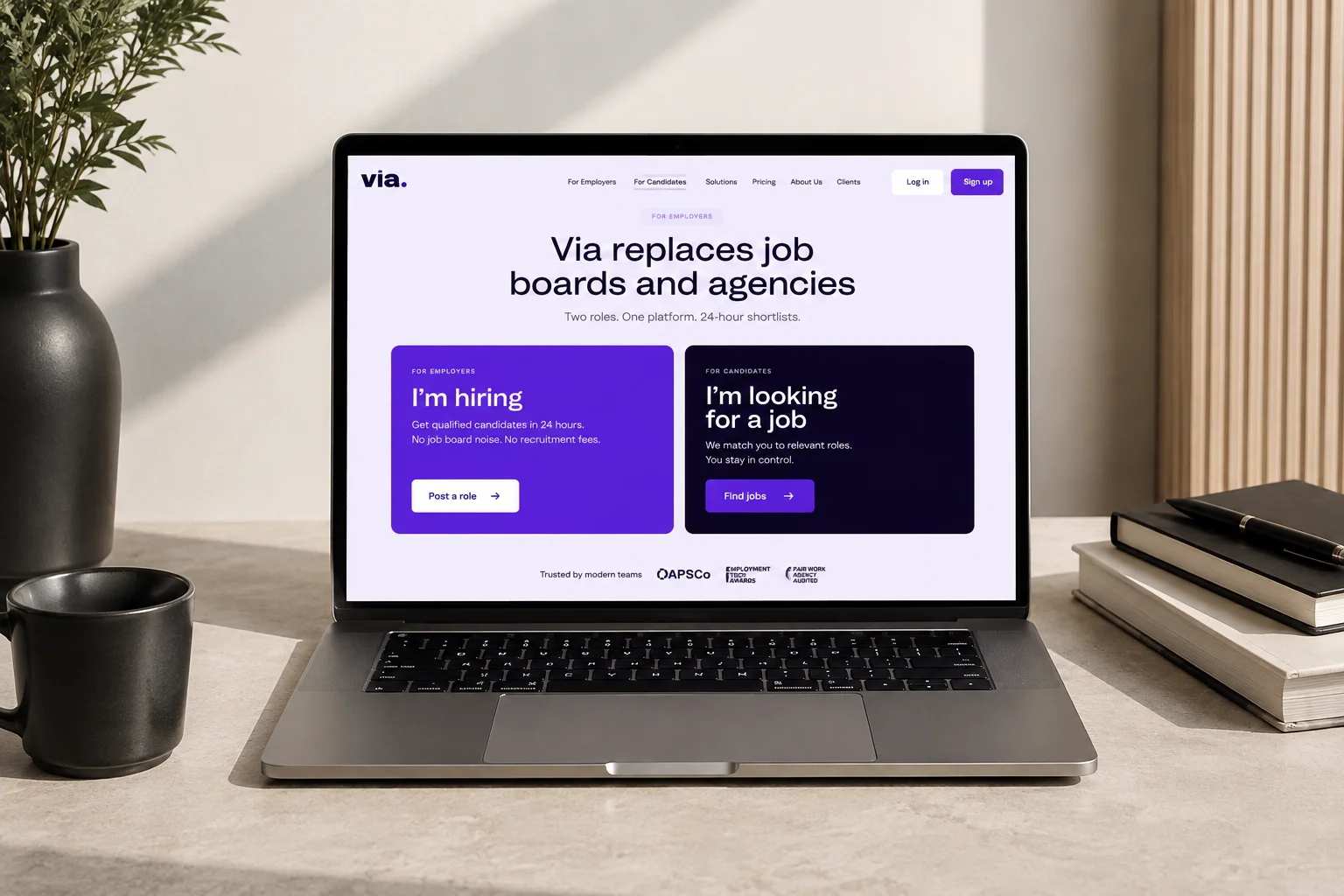
As UK organisations navigate 2026 hiring budgets, the reliance on traditional contingency staffing agencies is undergoing severe scrutiny. Talent acquisition leaders are under mounting pressure to reduce overhead while simultaneously accelerating time-to-hire. For decades, traditional models have charged high premiums. These premiums are usually 15% to 25% of a candidate’s first-year base salary. However, the modern hiring landscape is rapidly shifting towards curated shortlisting and talent matching platforms. By replacing transactional sourcing and manual CV screening with automated evaluation, businesses are drastically reducing operational costs and securing top talent in record time.
What is a Curated Shortlisting Platform?
A curated shortlisting platform is an advanced hiring solution that replaces manual CV screening and speculative job board campaigns with multi-dimensional candidate evaluation. Instead of recruiters spending weeks manually screening CVs, these platforms instantly match candidates against skills, experience, and salary criteria. This modern hiring approach delivers a highly vetted shortlist of interview-ready candidates rapidly, entirely bypassing the high commission structures of traditional agencies.
Difference Between Curated Shortlisting and Traditional Staffing Agencies
The primary difference between automated matching platforms and traditional staffing agencies lies in speed, fee structure, and assessment methodology. Staffing agencies typically take 35 to 42+ days to fill a role and charge a percentage of the hire's salary, whereas curated shortlisting platforms operate on flat software fees and often return highly vetted shortlists within 24 hours.
- Fee Structure: 15%–25%+ of first-year gross salary with agencies vs. flat SaaS subscription or predictable fixed pricing.
- Cost for a £50k Role: £10,000–£12,500 + VAT through agencies vs. a fraction of the cost (70%–90% hard-cost reduction).
- Shortlist Speed: 2 to 4+ weeks for agency submissions vs. 24 hours for a curated top-5 vetted shortlist.
- Total Time-to-Hire: 35–42+ days with traditional staffing (Taleva) vs. 5–10 business days.
- Quality Filter: Keyword matching and manual CV skimming vs. deep multi-vector skill matching and interview readiness.
- Operational Incentive: High-volume "CV throwing" to race competitors vs. objective matching against specific job scorecards.
Curated Shortlisting Platforms vs. Staffing Agencies Cost Comparison
Staffing agencies charge 15% to 25% of a candidate’s first-year salary per hire.
In the UK, this averages £7,000 to £15,000 or more per hire. Curated shortlisting platforms use subscriptions or flat fees. These models separate recruitment costs from candidate salaries.
The structural flaw of traditional recruitment is that contingency fees scale with compensation rather than the recruiter's actual effort. According to data from GeraJobs, sourcing an entry-level £35,000 administrator carries a £5,250 fee, while a £60,000 operations lead requires virtually identical administrative workflows but commands up to £15,000. Public financial reports from UK staffing giants reflect this heavy burden, with average per-placement fees sitting between £5,500 and £8,600.
By switching to a specialised recruitment platform in the UK, organisations can completely eliminate these percentage-based invoices. Industry benchmarking from TheHireHub.ai demonstrates that shifting to curated shortlisting delivers an average ROI of 280% in year one. A company making 10 corporate hires annually at a £45,000 average salary spends £90,000+ on agency fees (at 20%). Replacing this with a curated shortlisting platform can save £75,000 to £80,000+ each year.
It can cut the total cost per hire by 80% to 90%, as noted by HireAgent.
Automated candidate matching platforms often deliver higher consistency and screening accuracy than contingency recruiters. Because contingency agencies work on a "no-win, no-fee" basis, recruiters feel pressure to submit CVs fast.
They do this to claim ownership of candidate profiles among competing agencies. This process is known as the "CV race."
This high-risk commercial structure leads to keyword-stuffed submissions without rigorous vetting and exceptionally high drop-off rates at the interview stage. In fact, standard CV-to-interview conversion rates hover between only 30% and 50% (Giig Hire). In contrast, curated shortlisting platforms evaluate candidates across multidimensional criteria. By filtering out unqualified applicants objectively, platforms like Via deliver a curated top-five shortlist ready for final interviews, ensuring hiring managers only spend time with high-probability hires.
The Via Advantage: Accelerating Corporate Hiring
Via is the next generation of curated talent matching. It bridges the gap between slow job boards and costly contingency agencies. Specialising in business support, corporate, and operations roles, Via uses custom-built screening technology to evaluate experience, verified competencies, and cultural alignment.
Rather than sending hiring managers lots of unsolicited resumes, Via delivers five pre-screened, interview-ready candidates within 24 hours. This dramatically compresses the standard 42-day UK hiring timeline into less than 10 days. By helping teams regain productive days, Via saves £200 to £500 per day in lost output. Via also replaces costly 20% placement fees with clear pricing. This modernises corporate talent acquisition.
Governance and Trust: Staying Ahead of Regulation
Crucially, modern talent matching relies on strong governance and complete trust. As compliance and employment regulations tighten across the UK and Europe, organisations must partner with platforms that guarantee accountability rather than unvetted "black-box" systems. Because Via uses its own database of screened jobseekers and not an employer’s ATS, Via is the Data Controller. This reduces the risk for employers who may be queried or sued by a candidate wishing to know how their details were scored by AI. Via stays ahead of new rules and strict GDPR standards, and is built with compliance of the new EU AI Act baked in. It delivers fair, clear and deterministic candidate reviews and strong data protection. This helps talent leaders scale with full confidence.
Frequently Asked Questions
What are cheaper alternatives to headhunters for operations roles?
The most cost-effective alternative to headhunters for operations and corporate support roles is a curated shortlisting platform. Traditional headhunters charge 20–25% of a candidate's annual salary, equating to £9,000–£12,500 on a £45,000–£50,000 operations role. Curated shortlisting platforms automate candidate discovery and vetting, delivering shortlists within 24 hours at a fraction of the cost, eliminating high agency commissions while preserving (and often enhancing) candidate quality.
How to hire corporate staff without paying massive agency fees?
Organisations can hire corporate, administrative, and business support staff without agency fees. They can use curated shortlisting platforms, strong employee referrals, and automated screening tools. Instead of paying 20% placement fees or wasting over 40 hours reviewing unqualified applicants, curated platforms screen talent pools.
They then present a vetted shortlist of top, interview-ready candidates right away.
What are the best platforms to replace contingency recruitment agencies?
Leading platforms replacing contingency recruitment agencies include Via for corporate and business support candidate matching (delivering 24-hour vetted top-five shortlists). Via is not a passive job board or a standard applicant tracking system (ATS).
Instead, it is a custom-built platform designed with GDPR and EU AI Act compliance at its core. These platforms decouple pricing from starting salaries and provide objective, automated vetting that outperforms manual contingency methods.
Conclusion
Using curated shortlisting helps businesses hire the right candidates faster. It also helps protect budgets in the competitive 2026 talent market. By leaning into scalable, compliant platforms over legacy agency processes, modern hiring is finally aligning with business efficiency.